


The Secrets of Vernal Pools
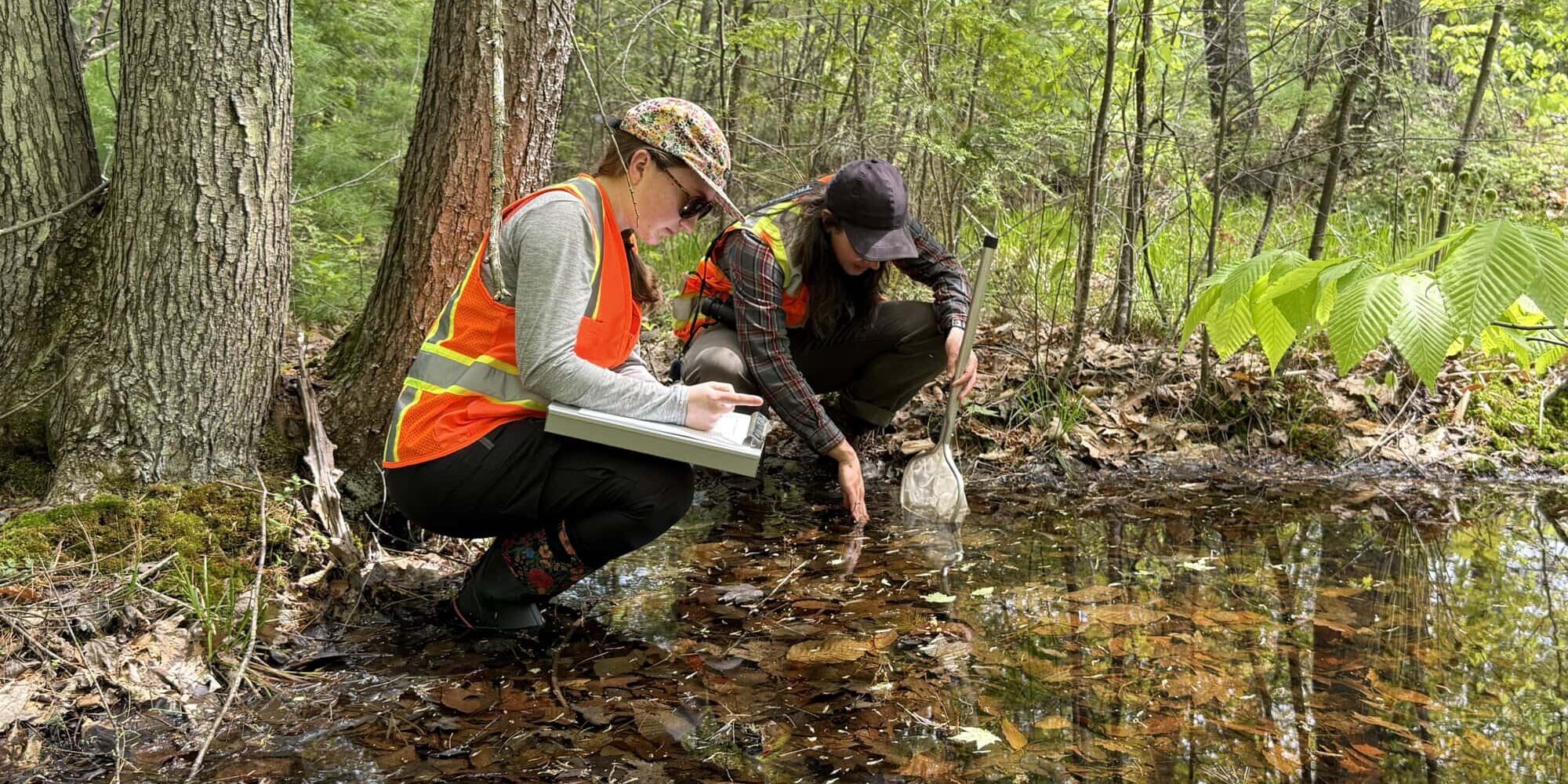
Vernal pools are seasonal bodies of water that provide critical habitat for aquatic and amphibious creatures. They consist of depressions in the landscape that fill with water in the spring due to snowmelt, rain, and when water tables rise.
There are a lot of species in our area that need vernal pools to breed. Species like spring peepers, wood frogs, and spotted salamanders conduct a mass migration (often called the Big Night) the first rainy nights of spring where temperatures are over 40 degrees, crossing through upland and often human-developed landscapes to lay egg masses in vernal pools.
Vernal pools are such important habitat features because of their unique, ephemeral functions. They provide a shaded, still-water nursery for eggs and tadpoles to mature with access to food from invertebrates and leaf litter. Vernal pools typically dry up by late summer/early autumn, at which point eggs have hatched and tadpoles have metamorphosed into adult amphibious forms.
The habitat surrounding vernal pools also plays an important role for the species who rely on them. Most of the adult forms of the species that use vernal pools spend portions of their lives in upland habitat. Safe access to wetland and vernal pool areas from upland areas is an important component of conservation for these species.
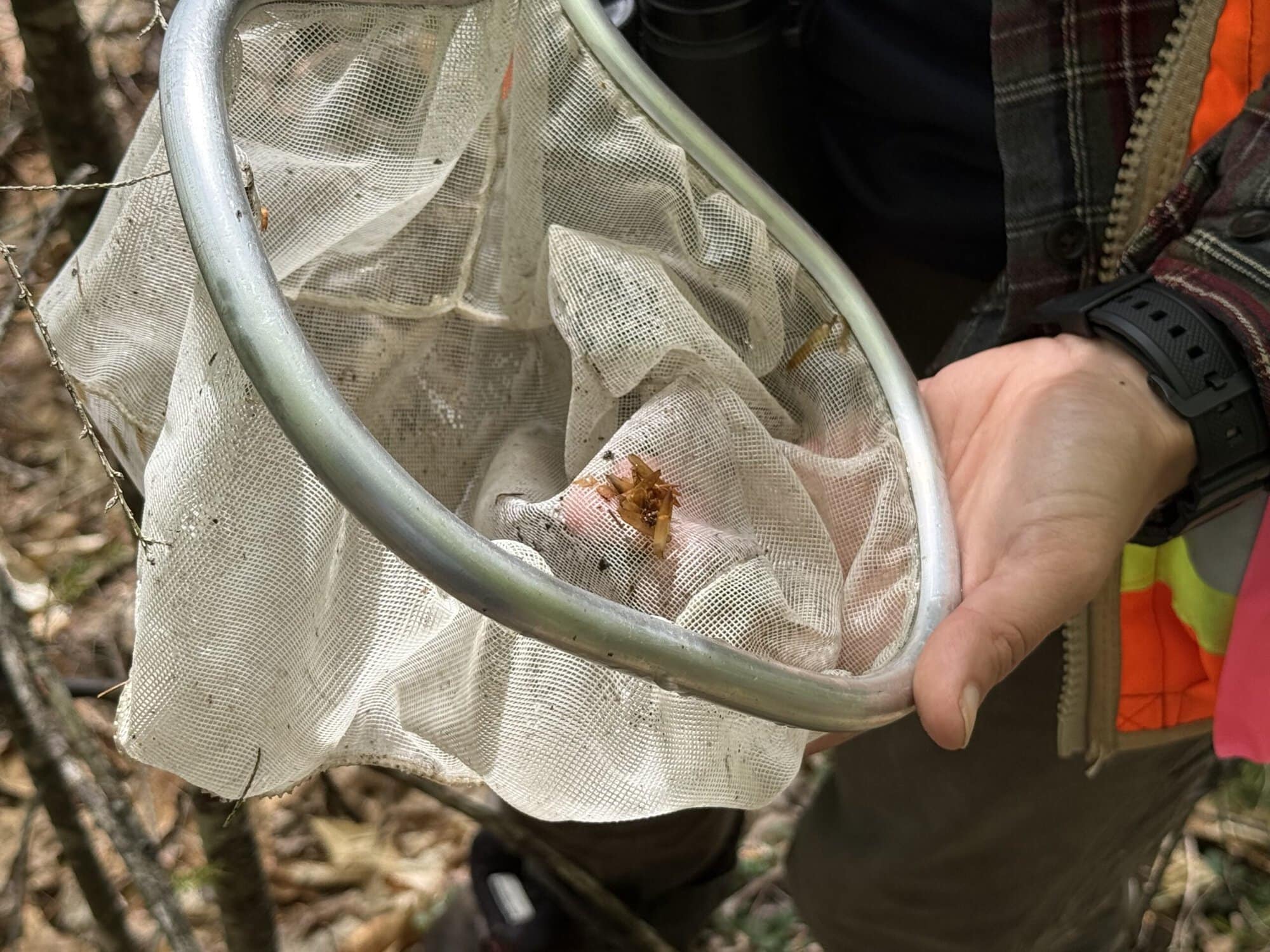
HEB first comes across vernal pools during survey and wetland delineations. If the delineation is happening when vernal pools are active, our environmental team will document the habitat and species associated with the pool and generate an assessment report. When it comes time to design and permit projects, we coordinate with NH Department of Environmental Services and NH Fish and Game to incorporate conservation measures into the project. This often takes the form of avoiding any work within 100 feet of the vernal pool, limiting development where feasible within 750 feet of the vernal pool, and incorporating design elements that allow for safe passage of aquatic and amphibious organisms in the project area.
For more information about HEB's Environmental Services, contact us at [email protected] or (603) 356-6936.